

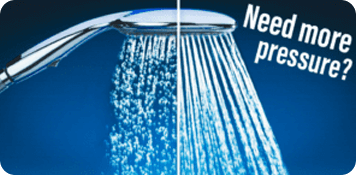
When a shower feels weak or a kitchen faucet seems slower than expected, many homeowners immediately assume they need more water pressure. It is one of the most common plumbing complaints we hear. However, the problem is not always pressure. What you are noticing may actually be a problem with water flow.
Water pressure and water flow are closely related, but they are not the same thing. A home can have adequate, or even excessive, water pressure while still experiencing disappointing flow at a showerhead or faucet. Understanding the difference can help you identify the actual plumbing problem without unnecessarily increasing pressure and putting additional stress on your pipes and fixtures.
What Is the Difference Between Water Pressure and Water Flow?
Water pressure is the force pushing water through your plumbing, while water flow is the volume of water passing through a fixture over a certain amount of time.
Water pressure is typically measured in pounds per square inch, or PSI. Static water pressure describes the pressure in the plumbing system when water is not actively flowing from fixtures.
Water flow is typically measured in gallons per minute, or GPM. It tells you how much water is actually coming from a showerhead, faucet, or other fixture.
Pressure helps move water, but it is only one factor determining how much water reaches you. Pipe size, fixture design, valves, buildup, and other restrictions can all affect flow.
Why Can You Have Good Water Pressure but Weak Flow?
One of the biggest misconceptions about residential plumbing is that disappointing flow automatically means low pressure.
Imagine water traveling through a pipe with a restriction. There may be plenty of pressure behind the restriction, but the obstruction limits how much water can pass through it.
The same principle can apply throughout a home’s plumbing.
Possible causes of poor water flow include:
- Clogged faucet aerators
- Mineral buildup in showerheads
- Partially closed valves
- Restricted or deteriorated piping
- Problems with fixture cartridges
- Pressure-reducing valve issues
- Plumbing design or pipe sizing
- Several fixtures operating simultaneously
Simply increasing household water pressure may not correct any of these underlying problems.
Why Does My Shower Have Low Water Pressure?
When homeowners complain about “low water pressure” in the shower, the first question should be whether the problem actually affects the entire home.
If one shower is weak but other fixtures perform normally, the issue may be specific to that shower.
A showerhead can accumulate minerals or debris that restrict its openings. The shower valve or cartridge can also affect performance. In these situations, cleaning, repairing, or replacing the appropriate component may improve the shower without changing household water pressure.
Modern showerheads are also designed with specific flow rates. Federal standards limit showerhead flow, and WaterSense-labeled showerheads use no more than 2.0 gallons per minute while also meeting EPA performance criteria for factors such as spray force and coverage.
The goal should be finding a fixture that provides satisfying performance within applicable requirements, not removing or modifying required flow-control components.
What Is Normal Water Pressure for a House?
There is no single perfect PSI setting for every home, but there is an important upper limit to understand.
Widely adopted plumbing code provisions require a pressure-reducing valve when static water pressure within a building exceeds 80 PSI, reducing the building’s pressure to no more than 80 PSI.
Local requirements ultimately determine what applies to a particular property.
More Water Pressure Is Not Always Better
It can be tempting to think that increasing pressure will make every shower and faucet perform better. Excessive pressure, however, can put unnecessary stress on plumbing components.
High water pressure may contribute to problems involving:
- Faucets and valves
- Toilet components
- Appliance supply connections
- Flexible hoses
- Water heater components
- Plumbing joints
It may also contribute to water hammer and other plumbing noise.
If your pressure is already adequate, increasing it simply to improve one weak fixture could create new problems without addressing the actual restriction.
What Are the Signs of High Water Pressure?
High water pressure is not always obvious. Possible warning signs include banging or noisy pipes, recurring leaks, premature fixture or valve problems, and unusually forceful water at fixtures.
However, these symptoms do not prove that pressure is too high.
The reliable way to evaluate household water pressure is to measure it. A plumber can check static pressure as well as how the system performs when water is actively flowing.
Why Static Water Pressure Does Not Tell the Whole Story
Static water pressure is measured when no water is being used. While that measurement is important, it does not always explain why your shower feels weak.
A plumbing system may show acceptable static pressure and then experience a significant pressure drop when several fixtures operate.
This is why evaluating flowing pressure, sometimes called dynamic pressure, can be useful.
If pressure falls substantially whenever water is used, a plumber can investigate possible restrictions, pressure regulator problems, supply limitations, or plumbing design issues.
Looking at both pressure and flow provides a more complete picture than checking a single PSI reading.
What Causes Low Water Flow Throughout a Home?
If multiple fixtures have weak flow, the problem may extend beyond a clogged showerhead or faucet aerator.
Restricted Plumbing
Older or deteriorated pipes can sometimes develop internal restrictions that reduce the amount of water available to fixtures.
Pressure Regulator Problems
Homes equipped with a pressure-reducing valve may experience performance problems if the valve is malfunctioning or no longer regulating properly.
Partially Closed Valves
A valve that is not fully open can restrict water entering part or all of the plumbing system.
High Simultaneous Demand
Water flow is shared when several fixtures and appliances operate at once. Running multiple showers, faucets, a washing machine, and other water-using equipment simultaneously can affect performance.
The amount of change depends on the home’s plumbing design and available water supply.
Does Increasing Water Pressure Improve Shower Flow?
Increasing pressure can sometimes improve flow, but only when inadequate pressure is actually causing the problem.
If a clogged showerhead, restricted pipe, partially closed valve, or faulty component is limiting flow, raising household pressure may not provide the solution you expect.
This is why diagnosis should come before adjustment.
A plumber can determine whether the home truly has inadequate pressure, whether a particular fixture is restricted, or whether another part of the plumbing system is reducing available flow.
Do Low-Flow Fixtures Actually Save Water?
Yes. Efficient plumbing fixtures can reduce household water consumption when they are properly designed and used.
A lower-flow showerhead reduces the amount of water delivered per minute. EPA WaterSense-labeled showerheads are specifically tested for both efficiency and performance.
Efficient faucets can also reduce water use during everyday activities such as handwashing and rinsing.
Tasks requiring a fixed amount of water are somewhat different. If you are filling a container with a specific number of gallons, reducing the faucet’s flow rate primarily increases the time required to reach that volume. But many everyday faucet and shower activities are not fixed-volume tasks, which is why efficient fixtures can provide meaningful water savings.
Modern toilets are also engineered to complete a flush using a specified volume of water. If a toilet regularly requires multiple flushes, the solution is not necessarily to increase water consumption. The toilet or drainage system may need attention.
How Is High Water Pressure Controlled?
If a home has excessive incoming pressure, a plumber may install or service a pressure-reducing valve, commonly called a PRV.
What Does a Pressure-Reducing Valve Do?
A PRV reduces excessive incoming water pressure to an appropriate level for the home’s plumbing system.
Not every home needs one. If a PRV is already installed, it can also wear or malfunction over time, potentially resulting in pressure that is too high, too low, or inconsistent.
What Does a Thermal Expansion Tank Do?
A thermal expansion tank serves a different purpose.
Water expands when heated. In certain closed plumbing systems, that expanded water cannot move backward into the public water supply. A properly installed expansion tank provides space to accommodate this thermal expansion.
An expansion tank does not regulate incoming municipal water pressure. The PRV controls excessive incoming pressure, while an expansion tank manages pressure changes associated with heated water in applicable closed systems.
Whether your home needs either component depends on the plumbing configuration and applicable requirements.
Why Does Water Pressure Drop When Multiple Fixtures Are Running?
When several fixtures operate simultaneously, they share the water available through the plumbing system.
Pressure losses also increase as water moves through pipes, fittings, valves, and restrictions. Pipe diameter, pipe length, plumbing layout, and overall supply capacity can all influence how noticeable the change becomes.
Some reduction in performance under heavy demand can be normal. A dramatic or newly developed drop deserves further investigation.
Should You Adjust Your Own Water Pressure Regulator?
Arbitrarily adjusting a pressure regulator is not the best way to address disappointing water flow.
Increasing the setting without knowing the home’s actual pressure could expose plumbing and fixtures to excessive pressure while leaving the original restriction unresolved.
Instead, have the pressure measured and determine why performance is poor before making adjustments.
Water Pressure vs. Water Flow: What Is the Takeaway?
If your shower or faucet feels weak, you do not necessarily need more water pressure. You may need better water flow.
Remember:
- Pressure measures force.
- Flow measures the volume of water delivered over time.
- Good static pressure can exist alongside poor fixture flow.
- Restrictions can reduce flow even when pressure is adequate.
- Excessive pressure can stress plumbing components.
- Increasing pressure is not a substitute for correcting the underlying problem.
Finding the cause is the key to improving plumbing performance safely.
Improve Your Water Pressure and Flow With Climate Control
Whether you have a weak shower, inconsistent water pressure, slow-flowing fixtures, or concerns about excessive pressure, Climate Control can help determine what is actually happening within your plumbing system.
Our team can evaluate water pressure, identify flow restrictions, inspect pressure-reducing valves, and recommend appropriate plumbing repairs for your home.
For professional plumbing repair in Liberty, MO, and the surrounding Kansas City area, contact Climate Control today for Comfort & Care from the Team with the Bear!