


Why Tankless Water Heaters Are Perfect for Shawnee Homes
When searching for tankless water heater Shawnee services, homeowners want reliable local experts who can deliver endless hot water and significant energy savings. Here’s what you need to know:
Top Tankless Water Heater Services in Shawnee:
- Professional installation and sizing consultation
- Gas, electric, and propane tankless options available
- 20+ year equipment lifespan with proper maintenance
- 24-34% energy savings compared to traditional tanks
- $108 annual savings (gas) or $44 (electric) on utility bills
- Federal tax rebate of $300 for gas-powered models
If you’re tired of running out of hot water during busy mornings or dealing with a bulky, outdated tank taking up valuable space, a tankless water heater could be the perfect upgrade for your Shawnee home.
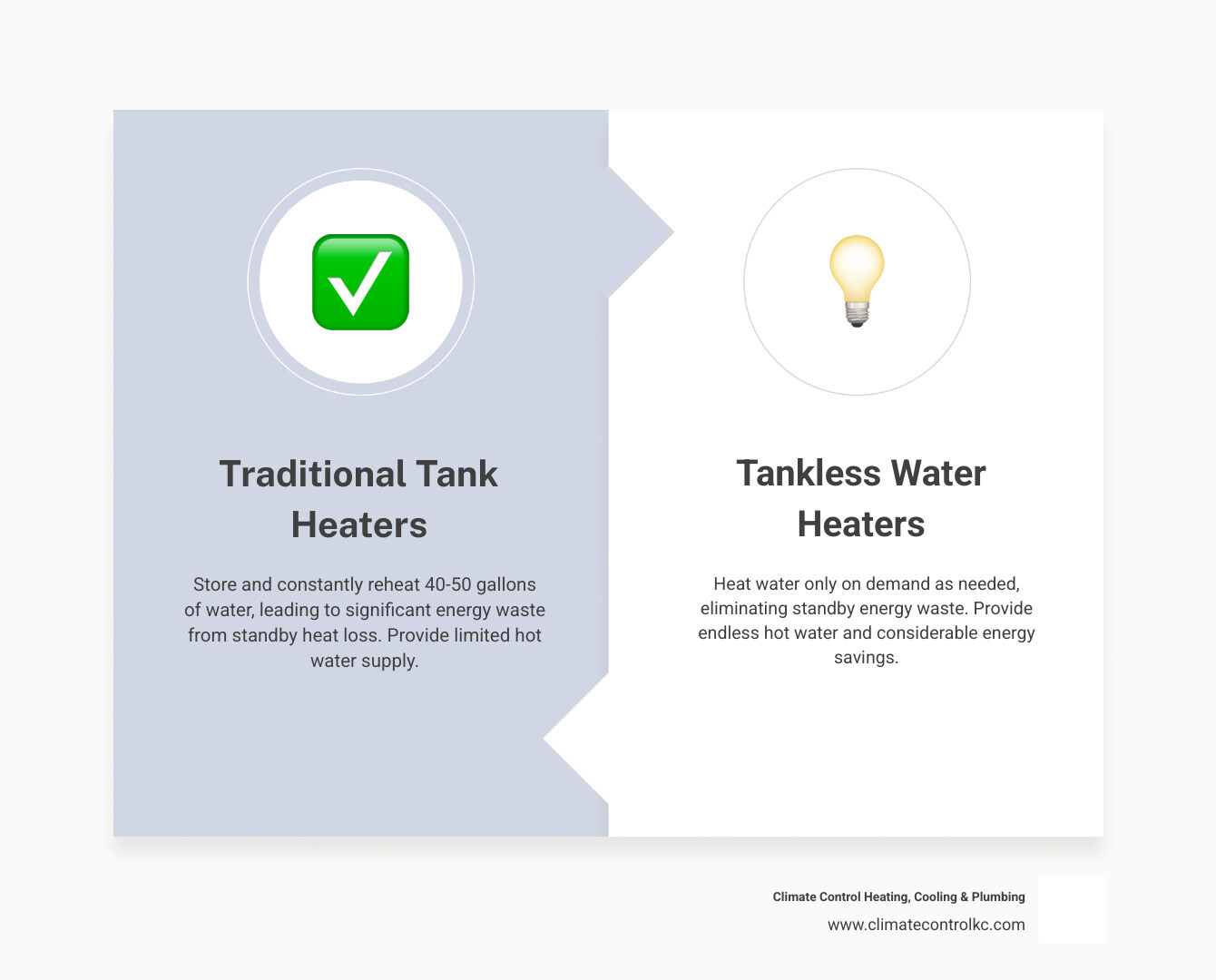
Traditional water heaters waste energy by constantly heating 40-50 gallons of stored water, even when you’re not using it. Tankless systems heat water only when you need it, eliminating this standby heat loss entirely.
The numbers speak for themselves: tankless units can reduce energy usage by 24-34 percent when your home uses less than 41 gallons of hot water daily. With proper maintenance, these systems reliably run for about 20 years – nearly twice as long as traditional tank heaters.
For Shawnee residents, this means lower monthly utility bills, endless hot water for multiple showers, and the peace of mind that comes with modern, efficient technology.
Why Upgrade to a Tankless Water Heater in Shawnee?
If you’re considering a home upgrade that delivers both immediate comfort and long-term savings, a tankless water heater Shawnee installation might be exactly what you’re looking for. It’s one of those improvements that makes you wonder why you waited so long to make the switch!
The biggest game-changer is energy efficiency. Think about it – your traditional water heater is like that friend who keeps the coffee pot on all day “just in case.” It’s constantly heating and reheating 40-50 gallons of water, whether you’re home or fast asleep. Tankless systems are much smarter. They only fire up when you actually need hot water, eliminating all that wasted energy from standby heat loss.
This on-demand approach translates into real cost savings on your monthly utility bills. We’re talking about energy savings of 24-34 percent for most Shawnee households. Over the system’s lifespan, those savings really add up, making it a smart long-term investment for your home’s value.
But it’s not just about the money. The space-saving design is a huge bonus, especially if you’re tired of that bulky tank hogging valuable storage space. Plus, there are genuine environmental benefits when you’re using less energy to heat your water. For a deeper look at all these advantages, check out the Benefits of a Tankless Water Heater.
Key Benefits for Shawnee Residents
Living in Shawnee, we know what matters most to local families. Here’s what really makes a difference in your daily life:
Continuous hot water supply is probably the benefit you’ll notice first. No more strategic shower scheduling or rushing through your morning routine because you’re afraid the hot water will run out. Whether someone’s doing laundry while you’re washing dishes, everyone gets the hot water they need.
Lower monthly utility bills become noticeable pretty quickly. Since the unit only heats water when you’re actually using it, you’re not paying to keep a giant tank warm 24/7. It’s like turning off lights when you leave a room, but for your water heating.
The longer equipment lifespan of 20+ years means this isn’t just a purchase – it’s an investment. With proper annual maintenance, these systems can reliably serve your family for decades. That’s roughly twice as long as traditional tank heaters.
You’ll also have a reduced risk of water damage from tank leaks. Traditional tanks can fail catastrophically, flooding basements and causing expensive damage. Since tankless units don’t store water, that nightmare scenario is basically eliminated.
The compact size allows for more flexible installation options too. These wall-mounted units are about the size of a large suitcase, so they can fit in spaces where a traditional tank never could. That frees up room for storage or other uses.
Tankless vs. Traditional: A Quick Comparison
Here’s how tankless systems stack up against traditional tank water heaters:
| Feature | Tankless Water Heater | Traditional Tank Water Heater |
|---|---|---|
| Upfront Cost | Higher | Lower |
| Annual Energy Cost | Lower (24-34% savings) | Higher (constant reheating) |
| Lifespan | 20+ years | 8-12 years |
| Hot Water Supply | Endless supply | Limited by tank size |
| Space Required | Compact, wall-mounted | Large floor space needed |
The energy savings really tell the story. Traditional tanks suffer from standby heat loss – they’re constantly losing heat through their walls and having to reheat that water. It’s like leaving your oven on low all day just in case you want to bake something.
Tankless units eliminate this waste entirely. The energy savings statistics show 24-34% less energy use for typical households. Gas-powered tankless systems save an average of $108 annually, while electric models save around $44 per year compared to traditional tanks.
Over the unit’s extended lifespan, these savings become substantial. When you factor in the longer equipment life and reduced maintenance needs, the financial case becomes even stronger. For more details on how these systems maximize efficiency, explore our guide on Energy-Saving Tankless Water Heaters.
The bottom line? While the upfront investment is higher, the combination of energy savings, longer lifespan, and improved convenience makes tankless water heaters an excellent choice for Shawnee homeowners looking to upgrade their home’s comfort and efficiency.
Selecting the Perfect Tankless System for Your Home
Choosing the right tankless water heater Shawnee solution for your home might feel overwhelming at first, but it’s really about understanding your family’s unique hot water habits and matching them with the right technology. Think of it like buying a car – you wouldn’t choose a compact sedan if you need to haul camping gear for six people every weekend!
The beauty of modern tankless technology is that there’s likely a perfect solution for your household, whether you’re empty nesters who rarely use hot water simultaneously, or a busy family of five with teenagers who seem to live in the shower. The key factors we’ll explore together include your household’s hot water demand, fuel type availability, sizing requirements, and budget considerations.
We’ve helped countless Shawnee families steer these decisions, and we’ve learned that the “perfect” system is really about finding that sweet spot where technology meets your lifestyle. Do you host large family gatherings where multiple people might shower before dinner? Do you run your dishwasher and washing machine at the same time to save time? These everyday details matter more than you might think when selecting your ideal unit.
For a comprehensive look at all the factors involved in making this important decision, you’ll find valuable insights in our guide on Choosing Tankless Water Heaters.
How to Choose the Right Size Tankless Water Heater for your Shawnee Home
Getting the sizing right is absolutely crucial – it’s the difference between endless hot water bliss and lukewarm disappointment. Too small, and you’ll be playing hot water musical chairs with your family. Too large, and you’ll pay more upfront for capacity you’ll never use.
The secret lies in understanding two key measurements: flow rate and temperature rise. Don’t worry, the math isn’t complicated, and we’ll walk you through it step by step.
Flow rate, measured in gallons per minute (GPM), tells us how much hot water your household uses at peak times. Picture your busiest hot water moment – maybe it’s Sunday morning when someone’s showering, the dishwasher is running, and another family member is washing their hands. Each fixture has its own GPM requirement: a low-flow showerhead typically uses 1.0-2.0 GPM, while a kitchen faucet might demand 3.0-7.0 GPM.
Here’s where it gets practical. Let’s say you want two people to shower simultaneously – a common scenario in busy households. If each shower uses 2.0 GPM, your tankless unit needs to deliver at least 4.0 GPM of hot water. This simple calculation helps determine the minimum capacity your unit must handle. You can find a detailed example calculation from Compact Alliance that walks through various scenarios.
Temperature rise is equally important but often overlooked. This measures the difference between your incoming cold water temperature and your desired hot water output. In Shawnee, groundwater temperatures fluctuate with the seasons – colder in winter, warmer in summer. If your groundwater comes in at 50°F and you want a comfortable 120°F shower, your tankless unit needs to provide a 70°F temperature rise.
The good news is that considering low-flow fixtures throughout your home can significantly reduce your GPM requirements, potentially allowing for a smaller, more affordable unit. Modern low-flow showerheads and faucets can cut your hot water demand substantially without sacrificing comfort.
Fuel Type: Gas vs. Electric
The fuel type decision often comes down to what’s already available in your home and how much hot water your family typically uses. Both options have their place, and we’ll help you determine which makes the most sense for your situation.
Natural gas and propane tankless units are the powerhouses of the industry. They can handle higher flow rates and temperature rises, making them ideal for whole-house applications, especially in larger homes or families with significant hot water demand. These units are particularly impressive in colder climates where the temperature rise requirements are more demanding.
The trade-off is that gas units require proper venting for combustion gases – typically a dedicated vent pipe – and may need upgrades to your existing gas line to handle the increased load. However, there’s a nice financial incentive: gas-powered models qualify for a $300 federal tax credit, which helps offset the initial investment.
Electric tankless units shine in their simplicity. They don’t require gas lines or venting systems, making installation more straightforward in many situations. They’re particularly well-suited for point-of-use applications, like heating water for a single bathroom, or in homes where natural gas isn’t available.
The limitation with electric units is their lower flow rates compared to gas models, and they often require significant electrical panel upgrades to handle their high amperage requirements. This is especially true for whole-house electric units, which can add to your installation costs.
When it comes to efficiency, both types deliver impressive savings compared to traditional tanks. Gas units typically save homeowners about $108 annually, while electric models save around $44 per year. The U.S. Department of Energy notes that for homes using less than 41 gallons of hot water daily, tankless systems can be 24-34% more energy efficient than conventional storage units. You can explore more details about energy efficiency from Energy.gov.
Signs It’s Time for a Water Heater Upgrade
Sometimes your current water heater will practically announce that it’s ready for retirement. Other times, the signs are more subtle but equally important to recognize. Catching these warning signals early can save you from emergency replacements and potential water damage.
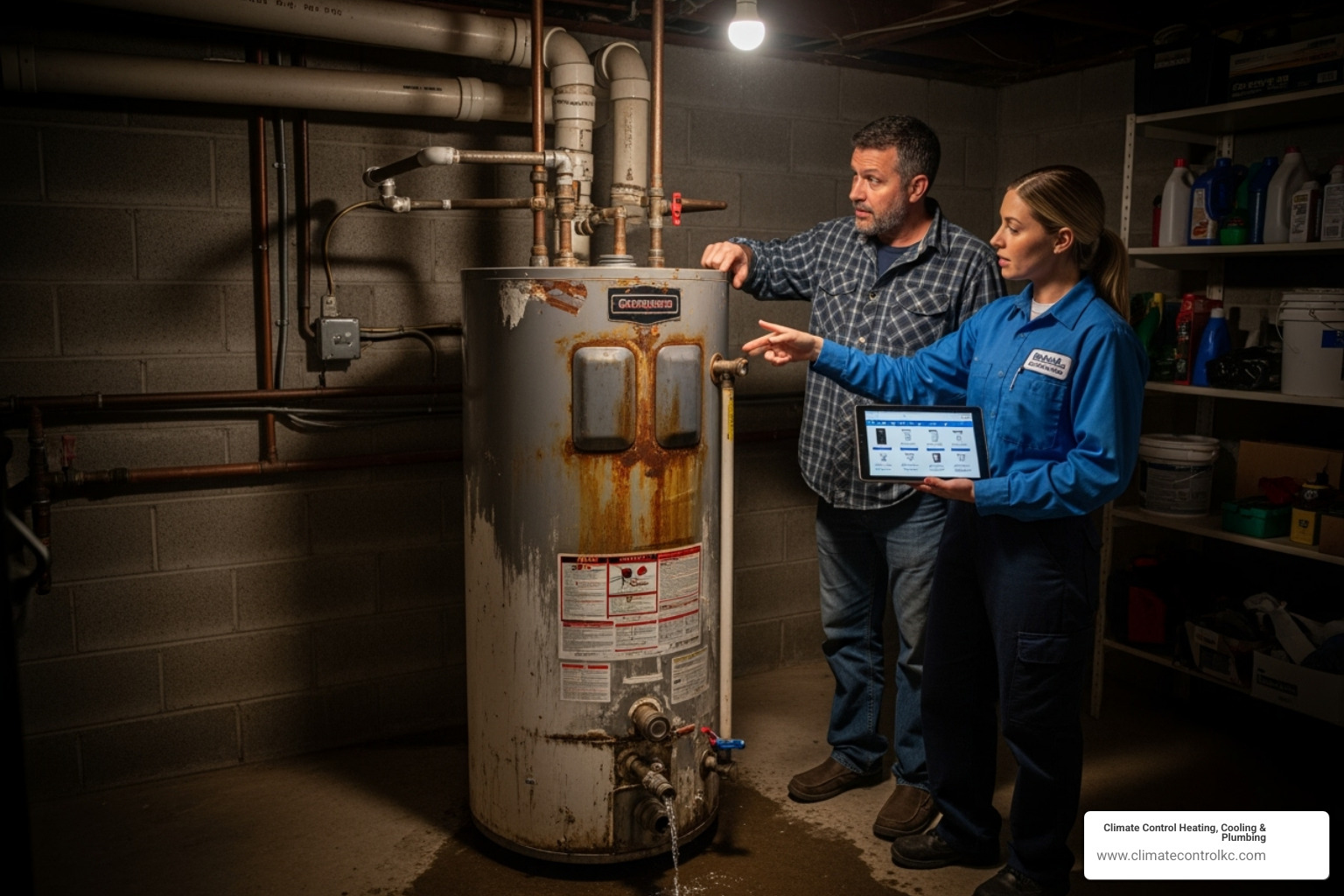
A leaking tank is your water heater waving a white flag – this is serious and needs immediate attention. Even small puddles around the base indicate internal corrosion that could lead to a catastrophic failure. Discolored or rusty water coming from your hot water taps is another clear sign that your tank is corroding from the inside.
Strange noises like rumbling or popping sounds aren’t just annoying – they indicate sediment buildup at the bottom of your tank. This sediment gets superheated and reduces your unit’s efficiency while potentially damaging the tank itself. Insufficient hot water or water that doesn’t get as hot as it used to suggests your system is struggling to keep up with demand.
Keep an eye on rising energy bills without corresponding increases in usage, as this often signals declining efficiency. If you’re making frequent repairs to your current unit, the costs often add up to more than a replacement would cost. Finally, age matters – traditional tank water heaters over 10-12 years old are living on borrowed time, and proactive replacement beats emergency situations every time.
Recognizing these signs early gives you the luxury of planning your tankless water heater Shawnee upgrade on your timeline rather than your water heater’s!
The Installation and Maintenance Journey
Once you’ve chosen the perfect tankless system, the next step is professional installation. This isn’t a DIY project – proper installation is crucial for efficiency, safety, and ensuring your unit complies with all local codes in Shawnee. After installation, a simple maintenance routine will keep your system running optimally for years to come.
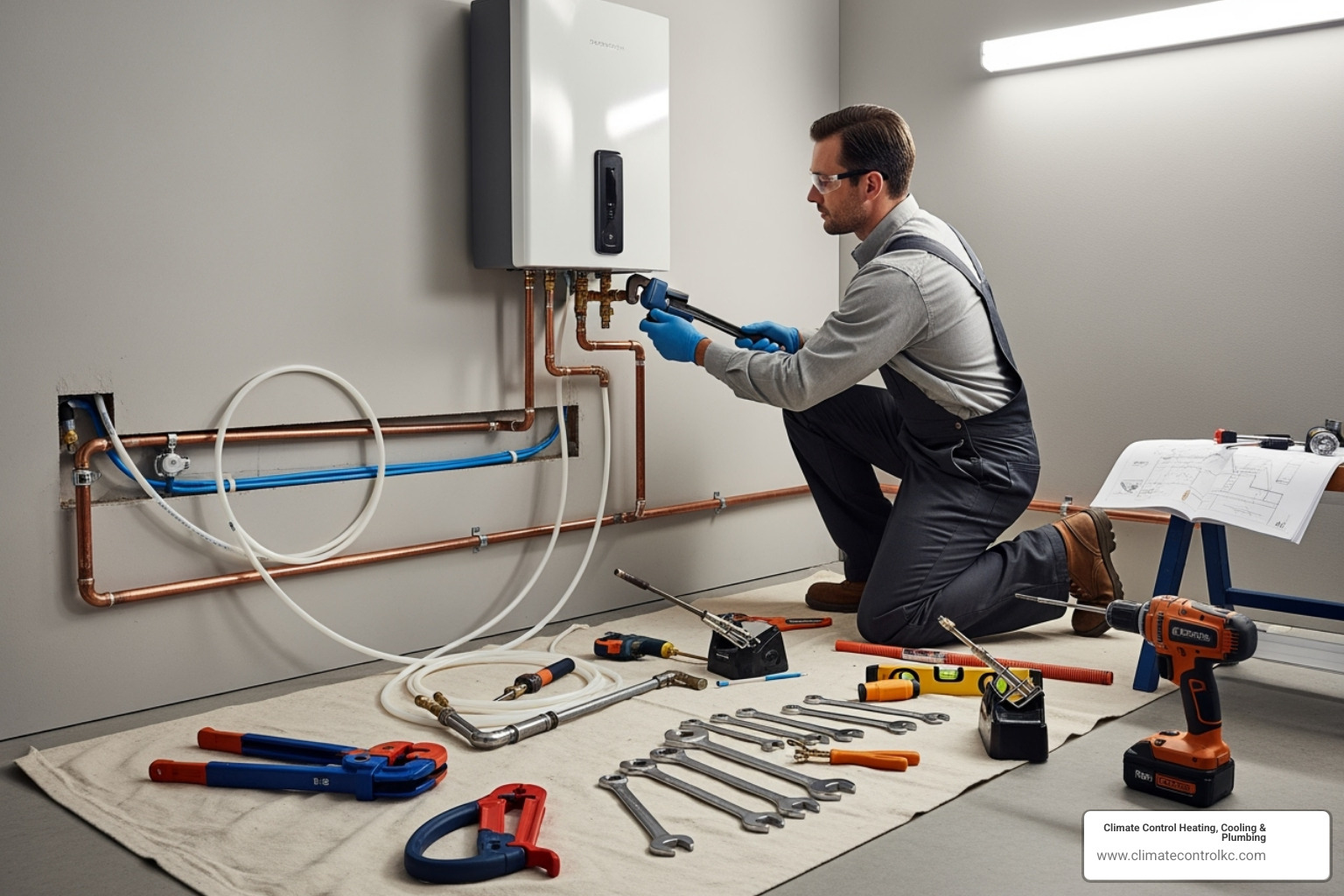
We understand that having work done in your home can feel overwhelming. That’s why our certified technicians focus on making the installation process as smooth and stress-free as possible. We pride ourselves on clean, efficient installations that comply with all safety codes, giving you complete peace of mind from day one.
Think of professional installation as the foundation for decades of reliable hot water. When done correctly, your tankless water heater Shawnee installation will provide consistent performance and maximum energy savings throughout its impressive lifespan.
Installation Costs for a Tankless Water Heater in Shawnee
The upfront investment for a tankless water heater Shawnee installation typically ranges from $1,000 to $3,000, though it’s important to view this as a long-term investment in your home’s comfort and efficiency. While this might seem higher than a traditional tank replacement, you’re getting a system that will last twice as long and save money every month.
Several factors influence the final installation cost. The unit itself varies in price depending on its capacity, brand, and features – larger homes with higher hot water demand need more powerful units. Professional labor costs depend on the complexity of your specific installation, and our experienced technicians ensure everything is done right the first time.
Venting requirements can add to the project cost, especially for gas units that need specialized stainless steel venting systems. If your current setup doesn’t accommodate this, new venting may need to be installed. Similarly, plumbing and gas line modifications might be necessary to handle the higher flow rates and gas demand of modern tankless units. Electric models sometimes require electrical panel upgrades to handle the increased power draw.
The good news? Federal tax credits of $300 are available for gas-powered tankless water heaters, helping offset some of the initial investment. This incentive recognizes the environmental benefits of these energy-efficient systems, making the upgrade even more attractive for Shawnee homeowners.
Lifespan and Required Maintenance
Here’s where tankless water heaters really shine – with proper care, these units can reliably serve your home for 20 years or more. That’s nearly double the lifespan of traditional tank heaters! This extended life means you won’t be shopping for another water heater anytime soon, making it an excellent long-term investment.
The secret to reaching that impressive 20-year lifespan is annual maintenance. Don’t worry – it’s much simpler than you might think. The primary concern for tankless units is mineral buildup from hard water, which is common in many areas around Shawnee.
Descaling or flushing removes these mineral deposits before they can reduce efficiency or damage your system. During a professional maintenance visit, we’ll flush your system clean, check and clean any filters, and inspect all connections for safety and proper operation. It’s like giving your water heater a yearly physical exam – a small investment that pays huge dividends.
This routine care keeps your system running at peak efficiency, ensures you get those energy savings we talked about, and prevents small issues from becoming expensive problems. Most homeowners are amazed at how straightforward the maintenance really is, especially compared to the headaches that come with an aging tank system.
Frequently Asked Questions about Tankless Water Heaters
When homeowners in Shawnee start considering a tankless water heater upgrade, they naturally have questions. We love these conversations because they help us match the perfect system to your family’s needs. Let’s explore the most common concerns we hear and give you the straight answers you’re looking for.
How much can I really save with a tankless water heater?
This is probably the question we get asked most, and for good reason – nobody wants to invest in something without knowing the real financial impact. The good news is that the savings are both immediate and long-lasting.
Right away, you’ll notice lower energy bills. Gas-fired tankless units save homeowners an average of $108 annually compared to traditional tanks, while electric models save about $44 per year. These savings come from eliminating standby heat loss – you’re no longer paying to keep 40-50 gallons of water hot around the clock, whether you’re home or not.
But here’s where it gets really interesting: over the unit’s 20+ year lifespan, those annual savings compound significantly. You’re looking at thousands of dollars in energy cost savings over time. Plus, $300 federal tax credit for gas models that helps offset your initial investment.
The real kicker? While you’re saving money year after year, you’re also avoiding the cost and hassle of replacing a traditional water heater every 8-12 years. It’s like getting a two-for-one deal on comfort and savings.
Can a tankless unit provide enough hot water for my whole family?
Absolutely! This concern usually comes from families who’ve experienced the dreaded “cold shower surprise” with their current tank system. We completely understand the worry, but here’s the beautiful thing about tankless technology: when sized correctly, you’ll never run out of hot water.
Unlike traditional tanks that store a finite amount of hot water, tankless units heat water continuously as it flows through the system. The key is matching the unit’s flow rate capacity to your household’s peak demand. During our consultation, we’ll walk through your family’s routines together. Do the teenagers all shower before school? Does someone do laundry while others are showering? We factor in all these real-life scenarios.
For example, if your family regularly has two showers running simultaneously while the dishwasher is going, we’ll calculate the total gallons per minute needed and recommend a unit that can comfortably handle that demand. A professional can calculate your peak demand to ensure an endless supply for simultaneous showers, laundry, and dishes – no more scheduling shower times or rationing hot water!
The result? Everyone gets the hot shower they want, when they want it. It’s one of those upgrades that genuinely improves daily life for the whole family.
Are tankless water heaters better for businesses in Shawnee?
We work with quite a few local Shawnee businesses, and the answer is a resounding yes! Tankless systems are ideal for businesses with high or intermittent hot water demand, offering both reliability and significant cost savings.
Think about restaurants that need constant hot water for dishwashing and sanitization – running out of hot water during the dinner rush isn’t just inconvenient, it’s a business crisis. Hair salons and spas need reliable hot water for client services throughout the day. Gyms and fitness centers must provide consistent hot showers for members, especially during peak hours.
For these businesses, tankless units ensure hot water is always available for customers and operations. There’s no risk of the “tank running dry” during busy periods. The significant energy savings are amplified in commercial settings where hot water usage is much higher than residential homes.
We’ve helped restaurants reduce their energy costs while ensuring they never have to tell customers they can’t wash dishes properly. We’ve worked with salons that love knowing their clients will always have a comfortable hair washing experience. It’s about reliability, customer satisfaction, and keeping operating costs under control – all things that matter tremendously to Shawnee business owners.
Conclusion: Your Next Step to Endless Hot Water in Shawnee
Choosing a tankless water heater Shawnee installation is more than just an appliance upgrade; it’s an investment in your home’s efficiency, comfort, and long-term value. We’ve seen how these innovative systems deliver endless hot water, significantly reduce energy bills, free up valuable space, and offer unparalleled longevity compared to traditional tanks. It’s a move towards a smarter, more sustainable, and undeniably more comfortable home life.

At Climate Control Heating, Cooling & Plumbing, we are dedicated to bringing these benefits to your Shawnee home. Our professional expertise ensures that you receive the right system, perfectly sized and expertly installed, with minimal disruption to your daily routine. We stand by our work with a 100% satisfaction guarantee, ensuring your peace of mind from consultation to installation and beyond.
Ready to say goodbye to cold showers and hello to a continuous supply of hot water? We’re here to guide you through every step of the process. Let us help you make the smart switch. Get a professional estimate for your water heater replacement today, and find the Climate Control difference.