


Why Your Home’s Heating System Might Be Fighting Against You
Nothing ruins a cold Kansas City morning quite like finding your heater blowing cold air when you need warmth most. It’s a frustrating experience, especially when you’re bundled up and shivering inside your own home.
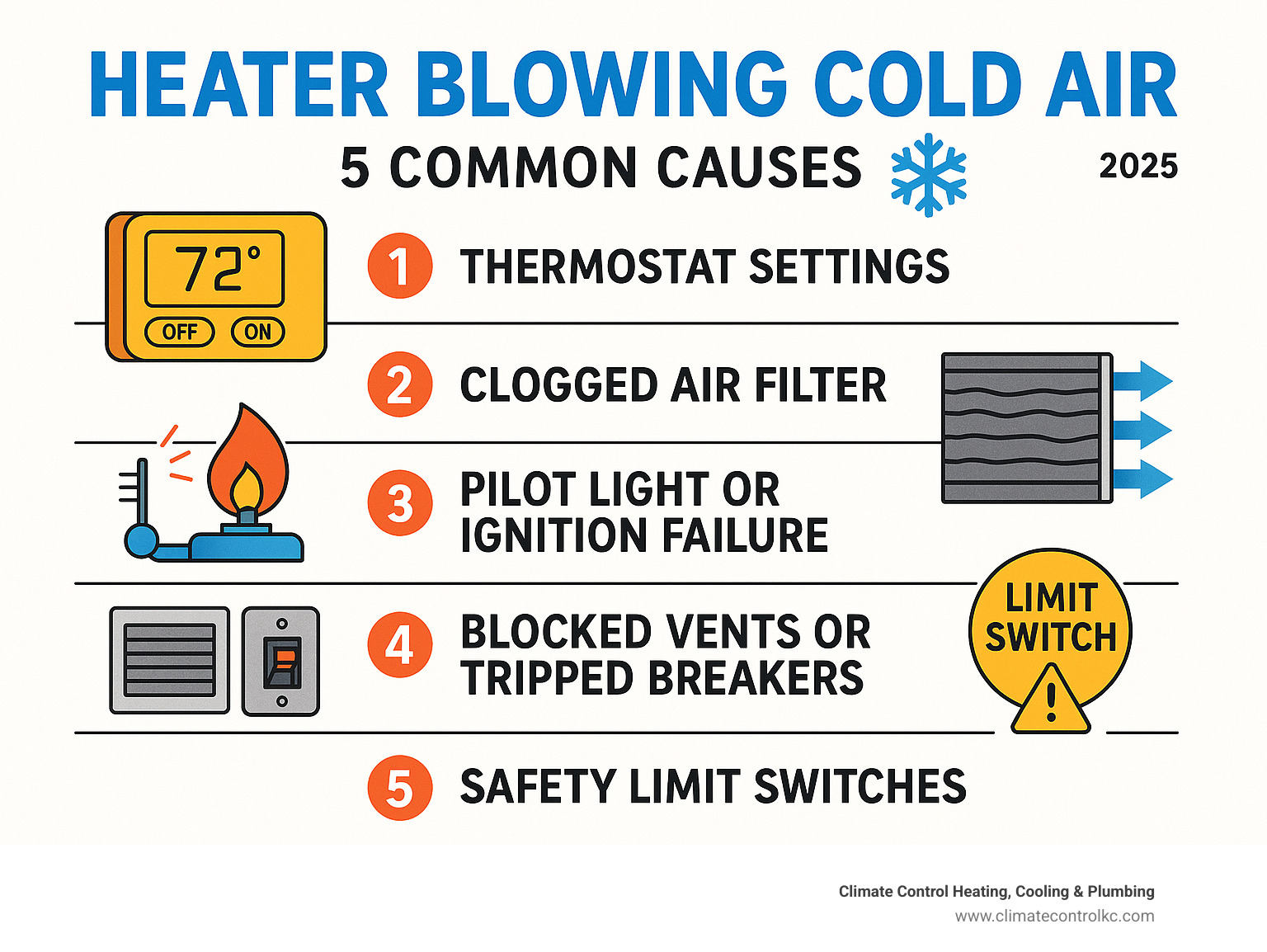
Quick Answer: Top 5 Reasons Your Heater Blows Cold Air:
- Thermostat Issues – Wrong setting (fan on “ON” vs “AUTO”) or dead batteries
- Dirty Air Filter – Restricts airflow and causes overheating shutdowns
- Ignition Problems – Pilot light out or faulty flame sensor
- Blocked Airflow – Closed vents or tripped circuit breakers
- Safety Shutoffs – Furnace protecting itself from damage
When your heating system starts blowing cold air, it’s usually trying to tell you something. Sometimes it’s a simple 5-minute fix you can handle yourself. Other times, it signals a serious problem that needs professional attention right away.
The good news? Most cold air issues have straightforward solutions. We’ll walk you through the quick checks first, then dive into the more complex problems that might require expert help.
Quick Fixes: Simple Checks Before You Call for Help
Before calling a technician for a heater blowing cold air, take a few minutes to perform some simple checks. Many heating issues have straightforward fixes that can save you time and money. These troubleshooting steps don’t require special tools or expertise.
Let’s walk through the most common culprits behind cold air coming from your vents. And if you need more comprehensive help with your home comfort systems, you can learn about our HVAC services and how we keep Kansas City homes comfortable year-round.
Check Your Thermostat Settings
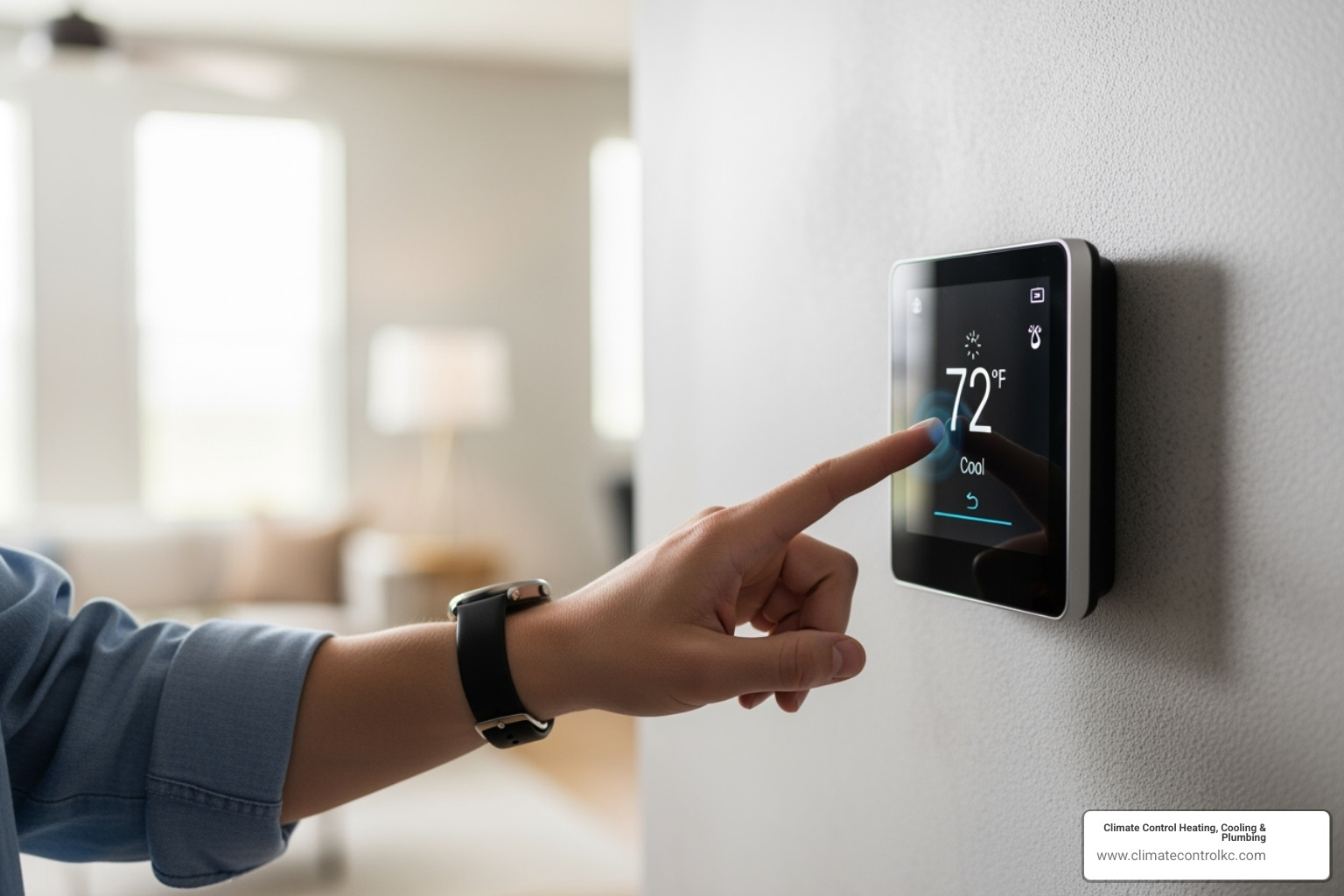
Your thermostat is the command center for your heating system, and a simple setting error is a common cause of a heater blowing cold air.
First, ensure your system is set to “Heat” mode, not “Cool.” Next, check the fan setting. If it’s on “ON,” the fan runs constantly, circulating cool air when the furnace isn’t actively heating. Switch it to “AUTO” so the fan only runs when producing heat. Finally, check for low batteries, which can cause erratic behavior, and review your programmable thermostat’s schedule for any forgotten settings.
Inspect Your Air Filter
A dirty air filter is a top reason for a heater blowing cold air. When clogged with dust and debris, the filter restricts airflow, causing the furnace to overheat. As a safety measure, the furnace shuts down the heating cycle, but the fan may continue to run, blowing cold air.
To check your filter, slide it out and hold it to the light. If you can’t see through it, it needs replacing. Replace your filter every 1-3 months (more often in homes with pets or allergies). This simple step also improves efficiency; replacing your furnace filter can cut energy bills by helping your system run more efficiently.
Ensure Vents and Breakers are On
Improper airflow or a lack of power can also be the culprit. Walk through your home and ensure all air vents are open and unblocked by furniture, curtains, or other items. Blocked vents can restrict airflow and trigger a system shutdown, resulting in a heater blowing cold air.
Next, check your electrical panel for a tripped breaker labeled for your heating system. To reset it, flip the switch completely to “off,” then back to “on.” If the breaker trips repeatedly, it indicates a serious electrical problem that requires a professional.
Why Your Furnace is Blowing Cold Air: Common Culprits
If the quick fixes don’t work, the issue may be with your furnace’s internal components. A heater blowing cold air often points to a specific mechanical problem. Understanding these issues can help you know when to call a professional. For more details, see our guide on Common Heater Repair Problems.
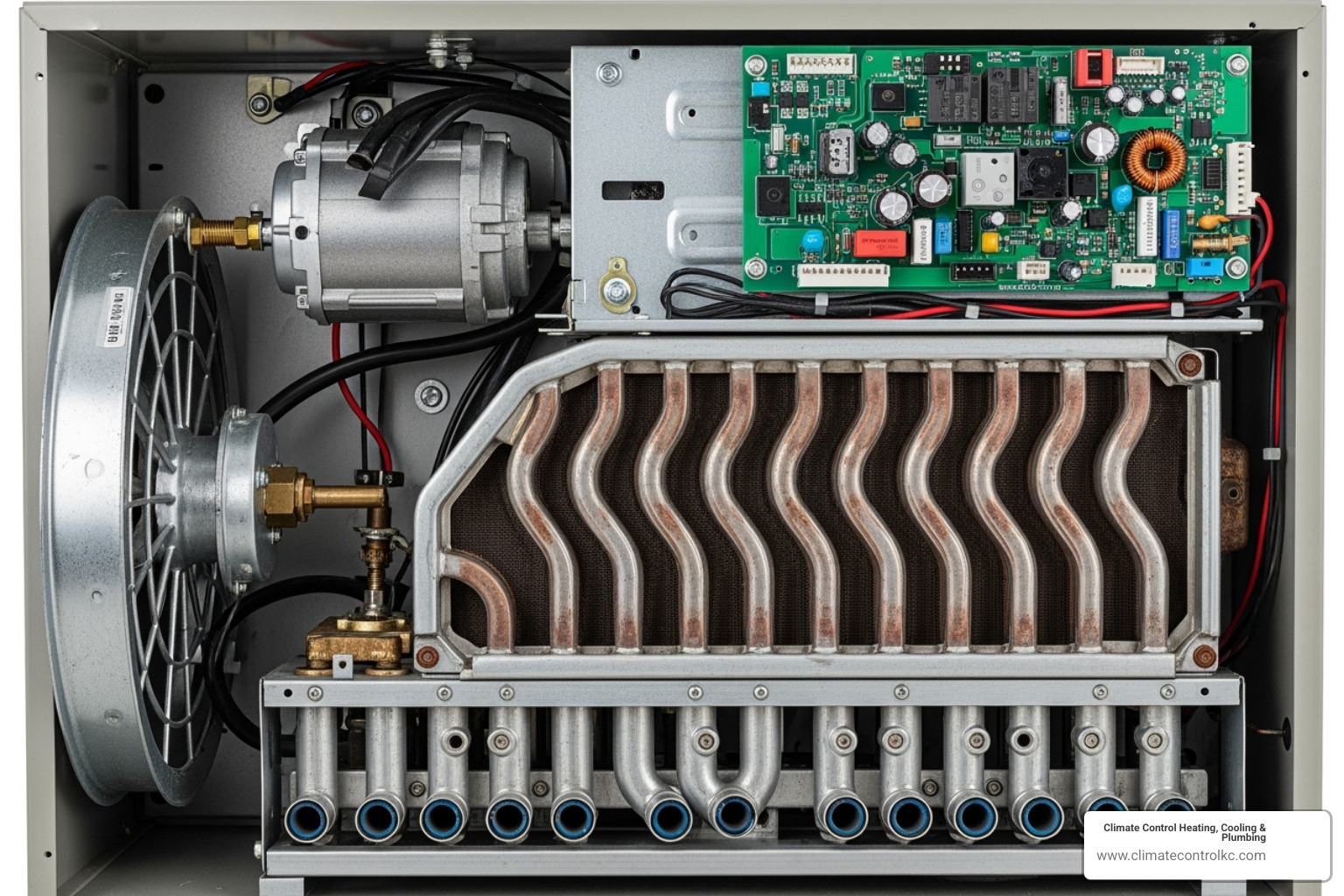
Pilot Light or Ignition Failure
A gas furnace can’t produce heat without a flame, which is a common reason your heater is blowing cold air.
- Older Furnaces: Many use a standing pilot light. If this flame goes out, you can try relighting it using the instructions on your furnace. If it won’t stay lit, you may have a faulty thermocouple, a safety device that needs professional repair.
- Modern Furnaces: Most use electronic ignition. A common issue here is a dirty flame sensor. This safety device confirms the burners have lit. If it’s dirty, it can’t detect the flame and shuts off the gas, causing the system to blow cold air.
Clogged Condensate Line
High-efficiency furnaces (often identified by white plastic PVC vent pipes) produce condensation during operation. This water drains away through a condensate drain line. If this line becomes clogged with debris, water backs up inside the unit. A safety switch, called an overflow kill switch, will then shut down the furnace to prevent water damage, leaving the fan to blow cold air. If you see water pooling around your furnace, the condensate line is likely clogged and needs to be cleared, which is often a job for a professional.
Overheating and Safety Limit Switches
Your furnace has a main limit switch to prevent it from getting too hot. If the furnace overheats, this switch shuts down the burners, but the blower continues running to cool the unit down, which is why you feel cold air. The most common cause of overheating is restricted airflow from a dirty air filter or blocked vents. Mechanical failures or an aging system can also be the cause. If your furnace frequently cycles on and off, blowing cold air in between, it’s likely overheating.
Leaky Ductwork
Your furnace may be working fine, but leaky ductwork could be the problem. If ducts have cracks or loose connections, heated air escapes into your attic or crawlspace. Leaks can also pull in cold air, diluting the warm air before it reaches your vents. Studies show that 20 to 40 percent of heated air can be lost this way, leading to a heater blowing cold air, uneven heating, and high utility bills. If some rooms are colder than others or your furnace runs constantly, leaky ducts may be to blame. Our team offers Heating Repair for Energy Efficiency to seal leaks and improve your home’s comfort.
Beyond the Furnace: Other Types of Heaters
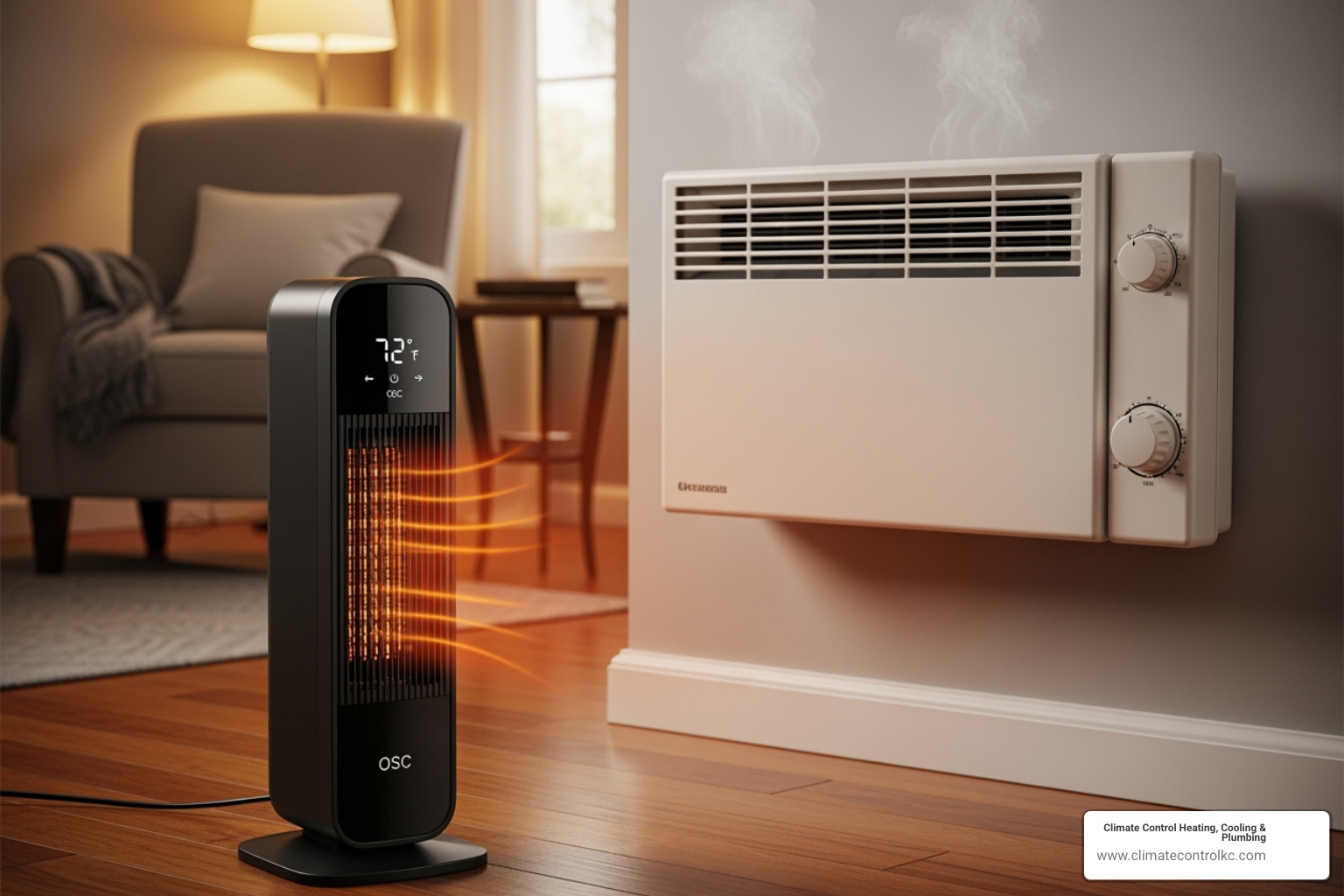
Not all homes use a central furnace; many rely on electric wall heaters, portable space heaters, or baseboard units. While simpler than gas furnaces, they can still have issues. When they fail, it’s not as simple as relighting a pilot light. For complex problems, see our guide on When to Call for Furnace Repair.
What to Do When an Electric Heater is Blowing Cold Air
It’s frustrating when an electric heater is blowing cold air. Since they work by passing air over heated elements, cold air means a breakdown in that process. Try these steps:
- Check the reset button: Most electric heaters have a manual reset for their overheat protection feature. This trips if airflow is blocked. Find the button and press it to reset the unit.
- Verify the setting: Ensure you haven’t accidentally selected a fan-only setting. Switch the unit to a “Heat” or temperature setting.
- Check the heating element: If other steps fail, you may have a defective heating element. These components are what create the heat. When they fail, they usually cannot be repaired, and the entire unit may need to be replaced.
For any electrical issues, especially with wall-mounted units, consult a licensed electrician for safety.
Serious Issues: When to Call a Professional Immediately
A heater blowing cold air can sometimes signal a dangerous problem. Certain issues are not safe for DIY repair and require immediate professional attention. For help recognizing these critical situations, see our guide on Signs You Need HVAC Repair.
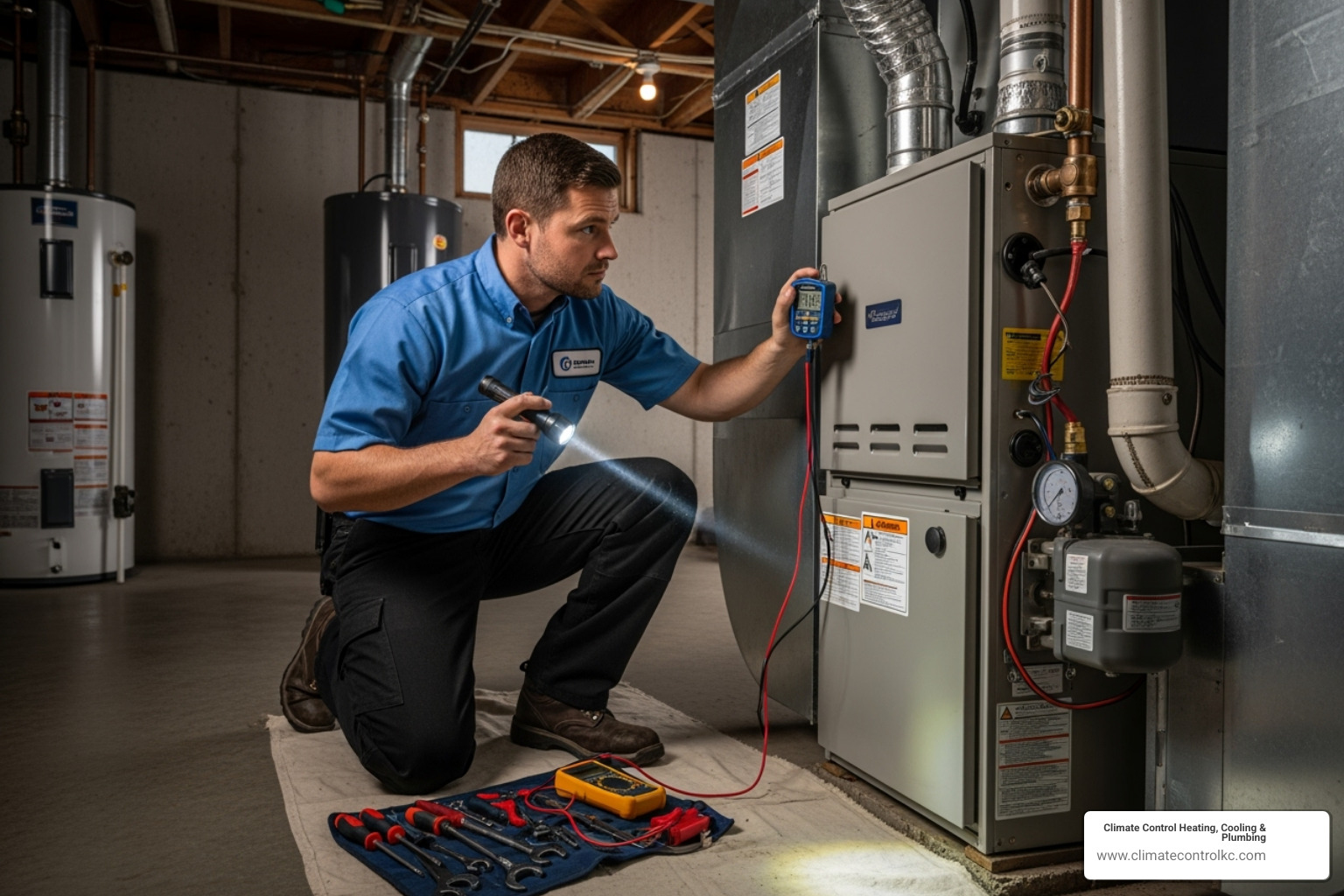
Cracked Heat Exchanger
A cracked heat exchanger is one of the most serious furnace problems. The heat exchanger contains dangerous combustion gases, and a crack can allow them to leak into your home’s air. Carbon monoxide poisoning is no joke. This invisible, odorless gas can cause flu-like symptoms (headaches, nausea, dizziness) and can be fatal.
Signs of a cracked heat exchanger include soot buildup, strange smells, or yellow, flickering burner flames. If your CO detector alarms, evacuate immediately and call for emergency help. Ensure you have working CO detectors on every level of your home. If you suspect a crack, turn off your furnace and call a professional. This is not a DIY repair.
Gas Supply Problems
The rotten egg smell of natural gas indicates a dangerous leak. If you smell gas:
- Do NOT use light switches or phones indoors.
- Evacuate everyone from the house immediately.
- From a safe location, call your gas company’s emergency line or 911.
Other issues, like a closed gas valve, can also stop your furnace. However, any problem involving the gas supply requires a trained professional for safe handling.
Complex Electrical or Mechanical Failures
Modern furnaces have complex electrical and mechanical parts that can fail. A faulty control board (the furnace’s “brain”) can prevent the burners from igniting, causing the heater to blow cold air. Blower motor problems, like worn bearings, can also cause issues. Diagnosing and repairing these components requires professional expertise and tools. Attempting a DIY fix can be dangerous and cause more damage.
For safe and reliable Furnace Repair Services in the Kansas City area, including Olathe, Shawnee, Lenexa, and Liberty, trust our certified technicians.
Frequently Asked Questions about Heaters Blowing Cold Air
When your heater is blowing cold air, you likely have questions. Here are answers to some of the most common ones we hear from Kansas City homeowners.
Why does my heater blow cold air for a few minutes before the heat comes on?
This is usually normal. When your thermostat calls for heat, the furnace burners ignite first. The system intentionally delays turning on the blower fan until the heat exchanger has warmed up sufficiently. This prevents it from circulating cold air through your home. A brief delay of a few minutes is normal, but if it lasts longer than 5-10 minutes, it could indicate a problem.
Can a dirty flame sensor really stop my furnace from heating?
Yes. The flame sensor is a key safety device that confirms the burners have ignited. If the sensor is coated with soot or grime, it can’t detect the flame. As a precaution against unburned gas escaping, the furnace will shut off the gas supply. The blower fan may continue to run, resulting in a heater blowing cold air. Cleaning the sensor can sometimes fix the issue, but a faulty sensor will need to be replaced by a professional.
Is it more cost-effective to repair or replace an old furnace?
This depends on a few key factors:
- Age: If your furnace is over 15 years old, it’s likely less efficient and more prone to breakdowns.
- Repair Frequency: If you’re paying for frequent repairs, the costs can add up quickly, making a replacement more economical.
- The 50% Rule: If a repair costs 50% or more than a new furnace, replacement is usually the better financial choice. A new unit offers better reliability, energy efficiency, and a warranty.
For more help with this decision, read our article: Don’t Get Sentimental About Furnace Replacement.
Get Your Heat Back On with Professional Help
If you’ve tried these troubleshooting steps and your heater is still blowing cold air, it’s time to call a professional. Your safety is the top priority, especially with issues involving gas, electricity, or potential carbon monoxide leaks. Don’t hesitate to call for help if you encounter any serious warning signs.
Regular maintenance is the best defense against unexpected breakdowns. An annual furnace tune-up allows a certified HVAC technician to catch small issues before they become major problems, ensuring your system runs safely and efficiently.
At Climate Control Heating, Cooling & Plumbing, we provide honest, reliable service to homeowners throughout Kansas City MO, Olathe, Shawnee, Lenexa, Liberty MO, and the surrounding areas. We treat your home like our own and stand by our work with a 100% satisfaction guarantee.
Don’t shiver through another cold day. For expert heating repair in the Kansas City area, contact our team today! We’re here to restore the warmth and comfort your family deserves.