


Why Kansas City’s Water Quality Affects Your Daily Life
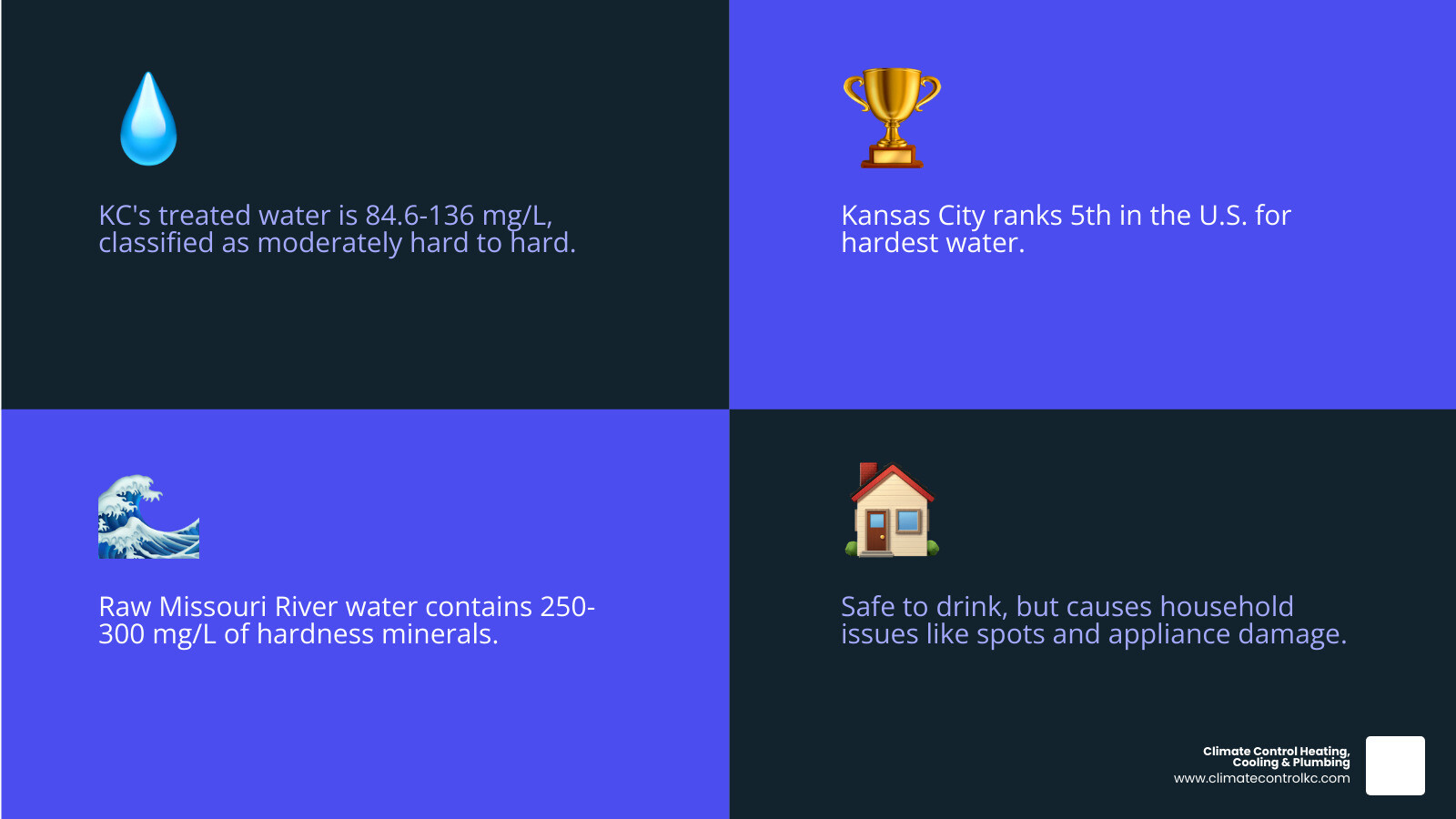
Hard water Kansas City residents deal with contains high levels of dissolved minerals, primarily calcium and magnesium, that create noticeable problems throughout your home. Here’s what you need to know:
Kansas City Water Hardness Quick Facts:
- Current Level: 84.6 to 136 mg/L (moderately hard to hard)
- National Ranking: 5th worst in the United States for hard water
- Source: Missouri River and groundwater wells
- Classification: Moderately hard to hard water
- Health Impact: Safe to drink, but causes household issues
Kansas City consistently ranks among the top cities nationwide for hard water conditions. According to KC Water’s 2024 report, treated water ranges from 84.6 to 136 mg/L of hardness minerals. However, the raw Missouri River water feeding our treatment plants contains 250-300 mg/L before processing.
This mineral-rich water affects every aspect of your home life. You’ll notice it in spotty glassware, soap that won’t lather properly, and that slippery film on your skin after showering. More concerning for homeowners are the hidden costs: reduced appliance efficiency, clogged pipes, and the need for frequent repairs.
The good news? Understanding your water quality is the first step toward protecting your home and improving your daily comfort.
Understanding Water Hardness
Picture water as a curious traveler on a long journey. As it flows through soil and rock formations, it picks up dissolved minerals along the way—kind of like collecting souvenirs! When water contains high levels of these mineral ions, particularly calcium and magnesium, we call it “hard water.”
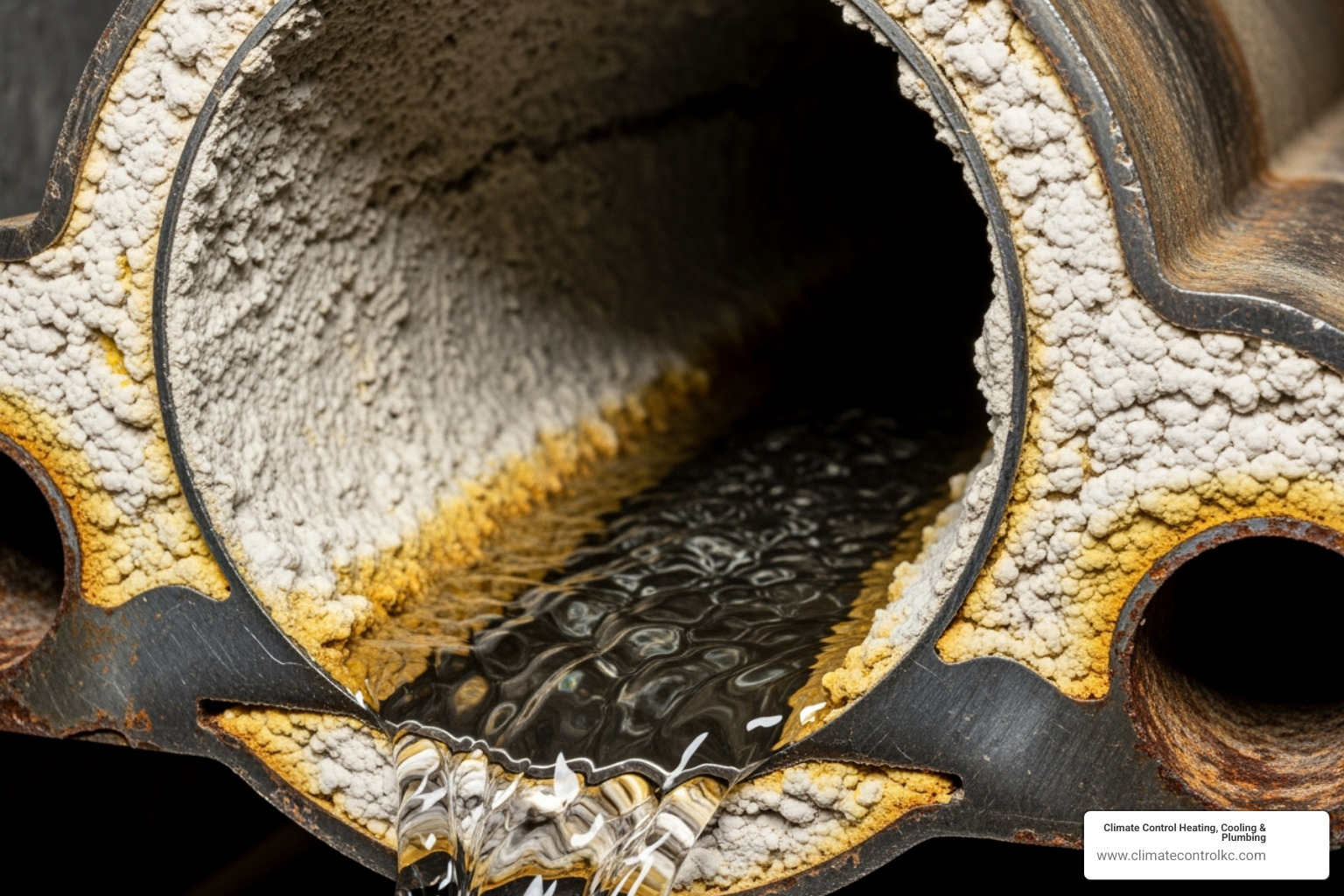
Here in Kansas City, our water’s mineral-rich character comes from a fascinating geological story. The Missouri River, our primary water source, flows through vast limestone formations and mineral-rich landscapes. By the time it reaches our treatment plants, this river water contains an impressive 250 to 300 mg/L of hardness minerals—that’s in the “very hard” category before any treatment!
We also draw water from alluvial wells, which are basically underground water sources that the Missouri River has recharged over time. These wells contribute their own share of minerals to our water supply, adding to what makes hard water Kansas City residents experience every day.
What Makes Water “Hard”?
The main characters in our hard water story are calcium and magnesium—two minerals that love to dissolve into water as it moves through the ground. Think of limestone and chalk formations as giant mineral dispensers. As water percolates through these rock layers, it naturally dissolves calcium carbonate and other compounds.
The more limestone-rich geology water encounters on its journey, the more minerals it collects. Since the Missouri River travels through extensive mineral-laden landscapes before reaching Kansas City, it arrives at our doorstep loaded with these dissolved minerals.
This natural process has been happening for thousands of years, which is why areas like ours consistently deal with hard water conditions. It’s simply the result of our local geology doing what it does best—sharing its mineral wealth with our water supply.
How Water Hardness is Measured
Understanding water hardness measurements helps you make sense of those numbers on your KC Water reports. Water hardness is measured in two main ways: Parts Per Million (PPM) or milligrams per liter (mg/L)—these terms mean the same thing. You might also see Grains Per Gallon (GPG), which is common in the water treatment industry.
Converting between these measurements is simple: divide PPM by 17.1 to get GPG. So if your water tests at 136 mg/L, that’s about 8 GPG.
Here’s how water hardness breaks down on the official scale:
- Soft Water: 0-60 mg/L
- Moderately Hard Water: 61-120 mg/L
- Hard Water: 121-180 mg/L
- Very Hard Water: 180+ mg/L
Kansas City’s treated water falls into the moderately hard to hard range at 84.6 to 136 mg/L, depending on seasonal variations and which treatment plant serves your area. When you compare this to the U.S. Geological Survey water hardness map, you’ll see that much of the Midwest shares similar water characteristics.
The good news is that KC Water works hard to reduce the mineral content from those original 250-300 mg/L levels in the raw river water. Without treatment, we’d be dealing with much more significant hard water challenges!
The State of Hard Water in Kansas City
Here’s the reality about hard water Kansas City residents face: we’re dealing with some of the most mineral-rich water in the entire United States. It’s not exactly a title we’re thrilled about, but understanding where we stand helps explain why so many homeowners here struggle with the same frustrating water issues.
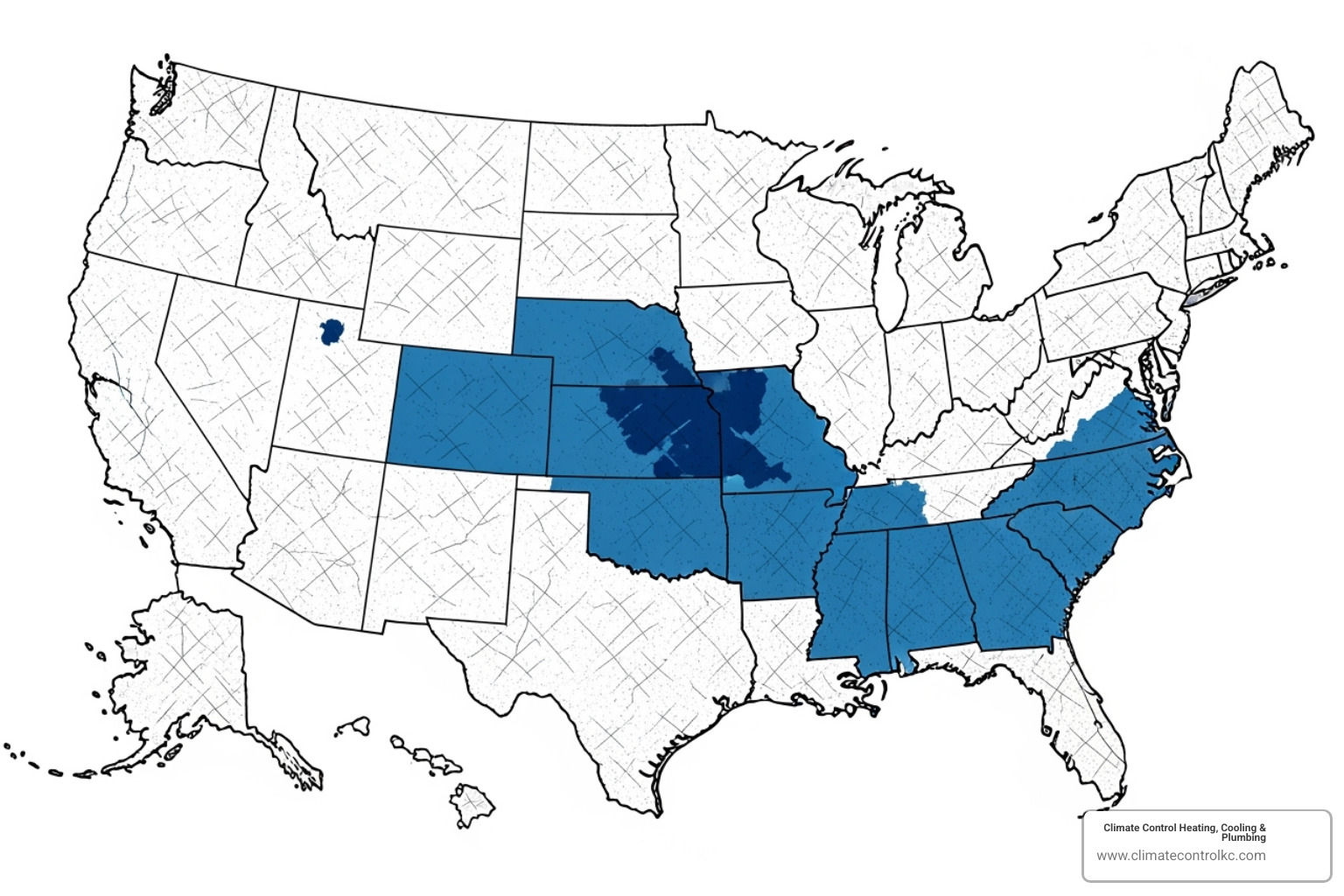
The numbers tell quite a story. While our water treatment facilities work hard to process the extremely mineral-rich Missouri River water, we’re still left with water that creates noticeable problems in homes throughout the metro area.
Kansas City’s Water Hardness Level
KC Water’s 2024 report shows our treated water ranges from 84.6 to 136 mg/L, with an average of 114.87 mg/L. This puts us firmly in the moderately hard to hard category on the water hardness scale. Some years, like in 2020, we’ve seen levels around 140 mg/L, showing that our water hardness does fluctuate.
What’s really eye-opening is comparing our treated water to what comes straight from the Missouri River. Before any processing, that raw river water contains a whopping 250 to 300 mg/L of hardness minerals. That’s in the “very hard” category, so our treatment plants deserve credit for bringing those numbers down.
You might notice your water feels different during certain times of the year. Spring snowmelt, heavy rains, and changes in upstream water releases all affect what flows down the Missouri River. These seasonal variations mean your water’s mineral content isn’t always exactly the same from month to month.
How KC Compares Nationally
When researchers look at hard water across America, Kansas City consistently lands in the top five worst cities for water hardness. A recent Leaf Home study ranked Kansas City fifth nationally for hard water conditions, noting levels in that 250-300 mg/L range we mentioned earlier.
We’re in some pretty notorious company. Cities like Indianapolis, Las Vegas, and San Antonio also top these hard water lists, with Las Vegas hitting over 300 ppm and San Antonio reaching 280-300 ppm. The entire Midwest tends to struggle with hard water, but Kansas City stands out even in this challenging region.
The discrepancy between our treated water reports and these national rankings makes sense when you consider that many studies look at raw water sources or untreated groundwater. While KC Water does an excellent job treating our supply, the underlying source remains extremely mineral-rich.
For those who want to dig deeper into local water quality data, Kansas City’s Water Quality Report provides detailed information about what’s in our water and how it’s monitored throughout the year.
The bottom line? Whether you’re looking at treated or raw water numbers, Kansas City residents are dealing with significantly harder water than most Americans. This explains why so many of us see the same telltale signs: spotty dishes, soap scum buildup, and appliances that don’t last as long as they should.
The Everyday Impact of Hard Water
Living with hard water Kansas City means dealing with frustrating daily reminders that minerals have made themselves at home in your water supply. Those white spots on your wine glasses after a dinner party? The crusty buildup around your bathroom faucets? That’s calcium and magnesium leaving their calling cards throughout your house.
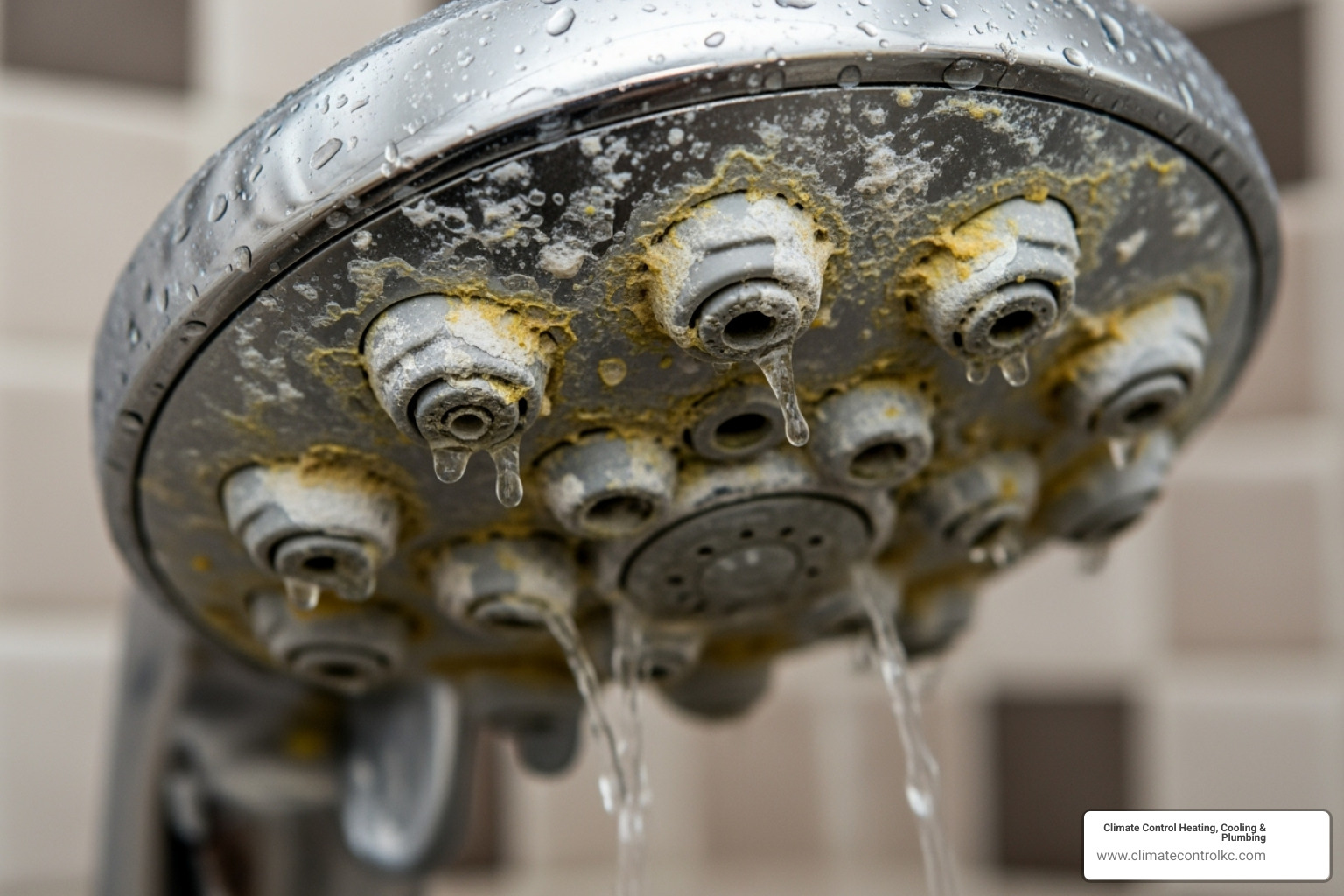
The reality is that hard water affects every corner of your home life. You’ll notice the telltale limescale buildup on fixtures, that stubborn soap scum that seems impossible to scrub away, and appliances that just don’t seem to last as long as they should. What starts as a minor annoyance quickly adds up to real costs – both in time spent cleaning and money spent on repairs and replacements.
Effects on Plumbing and Appliances
Here’s where hard water really starts costing you money. Those dissolved minerals don’t just pass through your pipes – they stick around, literally building up inside your plumbing system like unwelcome houseguests who never leave.
Mineral buildup in pipes happens gradually, but the effects are dramatic. As calcium and magnesium deposits accumulate, your pipes effectively get narrower, reducing water flow throughout your home. You might notice your shower pressure isn’t what it used to be, or that filling a pot takes longer than before.
Your fixtures bear the brunt of this mineral assault. Showerheads become clogged with limescale, creating uneven spray patterns that make your morning routine less enjoyable. Faucets develop that characteristic white, crusty buildup that’s nearly impossible to remove completely.
Water heaters suffer tremendously from hard water. The minerals coat heating elements and settle in the tank, forcing your water heater to work much harder to do its job. This means higher energy bills and a shorter lifespan for an expensive appliance. If you’re hearing strange popping sounds or getting inconsistent hot water temperatures, you might be seeing Signs You Need Water Heater Repair.
Dishwashers and washing machines also take a beating. The same minerals that clog your pipes interfere with these appliances’ internal components, reducing their efficiency and leading to premature failure. It’s not uncommon for appliances in hard water areas to need replacement years earlier than expected.
All of this adds up to costly home repairs that could have been prevented. Many Kansas City homeowners find themselves facing expensive plumbing overhauls or appliance replacements that trace back to hard water damage.
Effects on Cleaning and Personal Care
Beyond the mechanical issues, hard water makes everyday tasks more difficult and less effective. You’ve probably experienced the frustration of spotty dishes and glassware that look dirty no matter how much you scrub. Those cloudy water spots are actually mineral deposits that cling to surfaces even after washing.
Your laundry tells the story too. Clothes washed in hard water often look dull and feel stiff because the minerals interfere with detergent effectiveness. Colors fade faster, whites look gray, and you might find yourself using more soap trying to get things clean – which actually makes the problem worse by creating more soap scum.
Soap struggles to lather in hard water, whether you’re washing dishes, doing laundry, or taking a shower. The minerals bind with soap to form an insoluble precipitate, making cleaning less effective and leaving behind that sticky film you can feel on your skin.
Speaking of skin, many Kansas City residents notice dryness and irritation after bathing. Hard water can leave a residue that strips away natural oils, leading to itchy, tight-feeling skin. Your hair might feel dull or look lifeless, no matter what products you use.
For people with sensitive skin conditions like eczema, hard water can make symptoms worse. The mineral residue left behind can be particularly irritating to already compromised skin barriers.
Health Considerations for Hard Water in Kansas City
The good news is that hard water isn’t dangerous to drink. The EPA classifies water hardness as a secondary standard, meaning it’s an aesthetic and mechanical issue rather than a health hazard. You won’t get sick from drinking Kansas City’s hard water – it’s perfectly safe for consumption.
However, there are some comfort considerations. The skin irritation and dryness caused by hard water, while not medically dangerous, can significantly impact your quality of life. Many people find relief simply by addressing their water quality.
If you choose to install a traditional water softener, keep in mind that these systems replace calcium and magnesium with small amounts of sodium. For most people, this isn’t a concern, but those on strict low-sodium diets should be aware of this change. Our team can help you understand your specific situation through More info about water treatment testing.
The bottom line? Hard water Kansas City won’t hurt you, but it’s definitely making your daily life more difficult and expensive than it needs to be.
Solutions for Managing Hard Water
The good news? You don’t have to live with the daily frustrations of hard water Kansas City throws your way. There are proven solutions that can transform your water quality and protect your home from mineral damage. The right water treatment system isn’t just an investment in your plumbing—it’s an investment in your daily comfort and peace of mind.
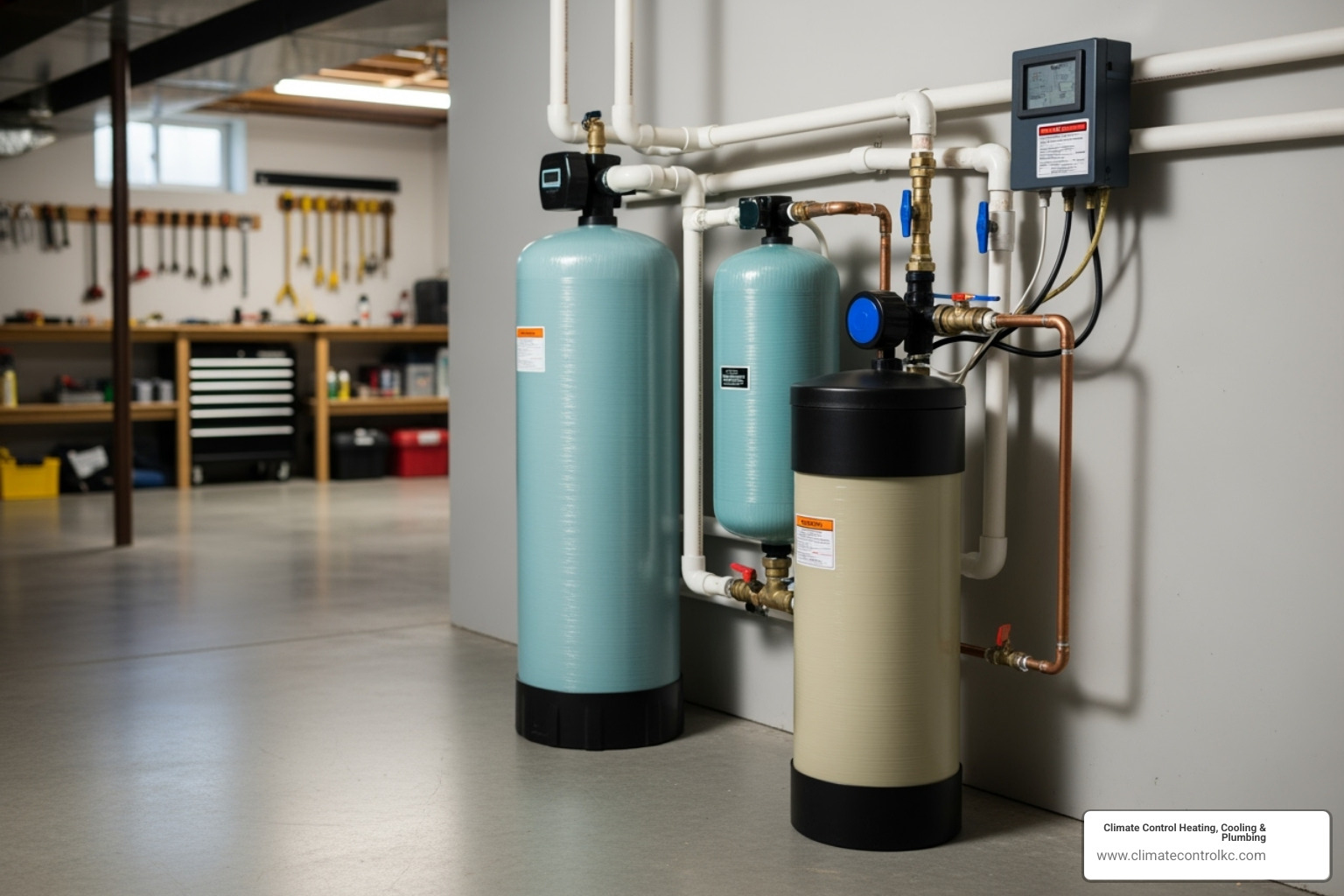
Think of water treatment as giving your home a protective shield against those troublesome minerals. Every drop of water that enters your house gets treated before it reaches your pipes, appliances, and taps. This means no more scrubbing limescale, no more dull laundry, and no more appliances failing before their time.
Whole-Home Water Softening Systems
A whole-home water softener is like having a bouncer at your front door—but instead of keeping out unwanted guests, it keeps out calcium and magnesium minerals. These systems work through a clever process called ion exchange, and once you understand how it works, you’ll appreciate the engineering behind your softer water.
Here’s the magic: Your water flows through a tank filled with tiny resin beads that are loaded with sodium ions. When those hard water minerals encounter these beads, they get attracted and stick to them, while the sodium ions take their place in the water. It’s like a perfectly choreographed dance where the troublesome minerals get swapped out for harmless sodium.
The system stays fresh through regeneration cycles. When the resin beads get full of calcium and magnesium, the softener automatically flushes them with salt water to recharge them with sodium ions. The old minerals get washed down the drain, and your softener is ready to tackle more hard water.
The benefits start showing up immediately. You’ll notice reduced scale buildup on everything from your coffee maker to your shower doors. Your skin and hair will feel softer because there’s no mineral film left behind after washing. Your clothes come out brighter and need less detergent to get clean. Best of all, your appliances run more efficiently because they’re not fighting mineral buildup every day.
Want to dive deeper into how these systems can transform your daily routine? Check out our guide on Effective Water Softener Solutions.
Choosing the Right Solution for Your Home
Every home’s water situation is unique, which is why we always start with professional water testing. This gives us the complete picture of your water’s mineral content and helps us recommend the perfect system for your family’s needs.
Salt-based softeners are the gold standard for removing hardness minerals completely. They’re the systems that deliver that true “soft water” feel you notice immediately. Some companies offer salt-free alternatives, but it’s important to understand these work differently—they condition the minerals rather than remove them, so you won’t get the same soft water benefits.
Maintenance requirements are surprisingly simple. Most homeowners just need to add salt to their system’s brine tank every few weeks, depending on water usage. We’ll help you figure out the right schedule so your system always performs at its best.
Professional installation makes all the difference in how well your system works and how long it lasts. Our team provides Professional Water Softener Installation to ensure everything is sized correctly and configured for optimal performance.
For families who want the purest possible drinking water, reverse osmosis systems are an excellent addition. These systems use advanced filtration to remove virtually everything from your drinking water, including any sodium from the softening process. It’s like having bottled water quality straight from your kitchen tap.
The right water treatment solution turns your daily battles with hard water into distant memories. No more scrubbing, no more frustration, and no more expensive appliance repairs—just clean, soft water throughout your home.
Frequently Asked Questions about Hard Water in Kansas City
Living with hard water Kansas City brings up a lot of questions, and we hear them every day from homeowners just like you. Let’s clear up some of the most common concerns we encounter.
Is hard water in Kansas City safe to drink?
Absolutely, yes! We completely understand why this question comes up so often. When you’re dealing with mineral buildup that can damage your appliances and leave spots on everything, it’s natural to wonder if that same water is safe for your family to drink.
Here’s the reassuring truth: hard water Kansas City meets all EPA primary health standards for safe drinking water. The minerals causing all those household headaches – primarily calcium and magnesium – are actually essential nutrients your body needs. Think of it this way: you’re getting a little extra mineral supplementation with every glass!
The EPA classifies water hardness as a secondary standard, which means it affects aesthetics and mechanics rather than health. So while your soap might not lather as well and your dishes might have spots, the water itself won’t make you sick. KC Water works diligently to ensure every drop reaching your home is safe and potable.
How do I know if I have hard water?
Your home is probably already telling you loud and clear that you have hard water – you just need to know what to look for! The signs are everywhere once you start paying attention.
Limescale on faucets and fixtures is usually the most obvious clue. Those white, chalky deposits around your kitchen sink, bathroom fixtures, and inside your toilet bowl? That’s mineral buildup from hard water evaporating and leaving its calling card behind.
In your shower, soap scum in showers and bathtubs creates that stubborn, cloudy film on glass doors and tile surfaces. No amount of scrubbing seems to make it disappear completely because it’s actually a chemical reaction between your soap and the minerals in the water.
Your dishwasher might be working perfectly, but if you’re still getting spotty dishes and glassware after every cycle, that’s hard water leaving its mark. Those cloudy streaks and spots aren’t dirt – they’re mineral deposits.
Pay attention to how your skin feels after bathing too. Dry skin after bathing that feels tight, itchy, or unusually dry could be hard water stripping away your natural oils. Your hair might feel dull, sticky, or difficult to rinse clean.
Finally, if your appliances are failing prematurely – your water heater making strange noises, your washing machine not cleaning as well, or your dishwasher needing frequent repairs – mineral buildup might be the hidden culprit shortening their lifespan.
Will a water softener make my water taste salty?
This is probably our most frequently asked question, and it’s a smart concern! Nobody wants to solve one problem only to create another, especially when it comes to the taste of your drinking water.
Here’s how the ion exchange process actually works: your water softener swaps out those troublesome calcium and magnesium minerals for sodium ions. The key thing to understand is that the amount of sodium added is typically very small and directly relates to how hard your original water was.
For most people, this slight sodium increase is not usually noticeable in taste. To put it in perspective, a glass of softened water contains roughly the same amount of sodium as a single slice of white bread. That’s pretty minimal!
However, we understand that some folks are on strict low-sodium diets or are particularly sensitive to taste changes. If that describes you, there’s a perfect solution: reverse osmosis for drinking water. You can enjoy all the benefits of soft water throughout your home for cleaning, bathing, and protecting your appliances, while having a dedicated RO system at your kitchen sink that removes the sodium along with many other dissolved solids.
This way, you get the best of both worlds – soft water where you need it for your home’s protection, and pure, great-tasting drinking water right at your fingertips.
Protect Your Home from Hard Water Damage
Living with hard water Kansas City doesn’t have to be a permanent struggle. We’ve walked through the science, the problems, and most importantly, the solutions. The reality is that hard water affects nearly every aspect of your home life – from those frustrating spots on your favorite wine glasses to the hidden damage slowly building up inside your water heater.
But here’s the thing: you don’t have to just accept it as “the way things are.” Understanding your water quality is absolutely the first step, but taking action is what transforms your daily experience. When you invest in a quality water treatment system, you’re not just buying equipment – you’re investing in your home’s future and your family’s comfort.
Think about it this way: every day you wait, mineral buildup continues accumulating in your pipes and appliances. That film on your skin after showering isn’t going anywhere. Your clothes will keep looking dull, and your appliances will keep working harder than they should.
A whole-home water softener changes everything. Suddenly, your dishes come out of the dishwasher sparkling clean. Your skin feels soft and smooth instead of tight and itchy. Your clothes are brighter and softer. Your appliances run more efficiently and last years longer. Even your morning shower becomes more enjoyable when your shampoo actually lathers properly!
The investment pays for itself over time through reduced appliance repairs, lower energy bills, and less money spent on extra soaps and detergents. Plus, there’s real value in simply feeling comfortable in your own home.
At Climate Control Heating, Cooling & Plumbing, we’ve helped countless Kansas City families make this transition. We understand the unique challenges our local water presents, and we know which solutions work best for our area. Our team will assess your specific situation, test your water, and recommend the perfect system for your home and budget.
Don’t let hard water continue controlling your daily routine. You deserve to enjoy clean, soft water throughout your home. Get a professional water softener installation in Kansas City and find what you’ve been missing. Your future self will thank you every time you turn on the tap.